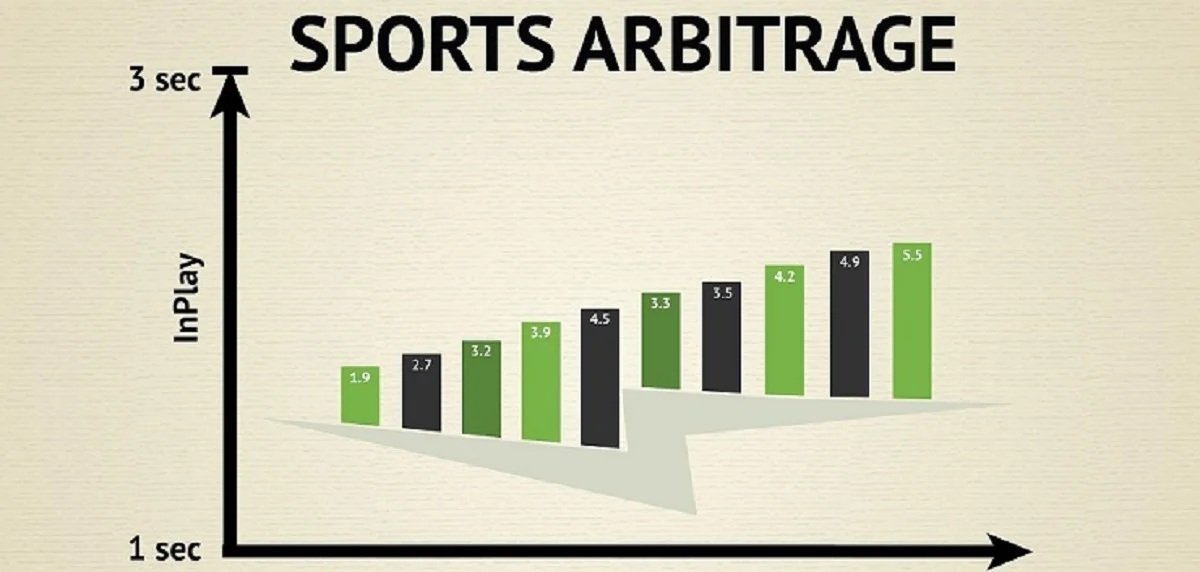
What is Arbitrage in Betting?
If you have ever wondered what is arbitrage in betting and whether it is something you can legally profit from, you are in the right place. Arbitrage betting — also called arb betting, sure betting, or miracle betting — is a strategy where a bettor places wagers on all possible outcomes of a sporting event across multiple bookmakers to guarantee a profit, regardless of the result. And yes, is arbitrage betting legal is one of the most common follow-up questions — the short answer is that in most regulated markets, it is.
The concept is borrowed from financial markets, where traders exploit price discrepancies across different exchanges to lock in risk-free returns. In sports betting, the same principle applies: different bookmakers set different odds, and when those differences are large enough, a bettor can cover every outcome and still come out ahead.
For example, if Bookmaker A prices Team X to win at 2.10 and Bookmaker B prices Team Y to win at 2.05, a smart allocation of funds across both bets can yield a guaranteed profit — no matter who wins the match.
These gaps — known as arb opportunities or sure bets — are usually small (1–3%) and short-lived, but they are mathematically exploitable. They exist because bookmakers independently set their own odds and do not always agree.
How Does Arb Betting Work?
Understanding the concept is one thing — knowing how it works in practice is another. Here is a step-by-step breakdown:
Step 1: Find an Odds Discrepancy
You identify two or more bookmakers offering odds on all outcomes of an event such that the combined implied probabilities add up to less than 100%. This gap is the arb.
Step 2: Calculate the Arbitrage Percentage
Use this formula to determine if an opportunity exists:
Arb % = (1 / Odds A) + (1 / Odds B)
If the result is less than 1 (or less than 100%), you have a profitable opportunity. The lower the percentage, the higher your potential profit margin.
Example:
- Bookmaker A: Team X wins @ 2.10 → 1/2.10 = 0.476
- Bookmaker B: Team Y wins @ 2.20 → 1/2.20 = 0.454
- Arb % = 0.476 + 0.454 = 0.930 (93%) → 7% profit margin
Step 3: Calculate Your Stakes
Divide your total stake proportionally so that your return is identical regardless of outcome. Free arb calculators are available online to automate this step.
Step 4: Place Your Bets Quickly
Odds change rapidly. Once you identify an arb, you need to place both bets before bookmakers update their lines.
Step 5: Collect Your Profit
Whichever outcome occurs, your pre-calculated return exceeds your total stake — locking in a risk-free profit.
Is Arbitrage Betting Legal?
The most common question bettors ask is: is arbitrage betting legal?
The answer is yes — in most countries where sports betting is regulated, arbing is entirely lawful. There is no law in the United Kingdom, United States, Australia, or most of Europe that makes placing bets across different bookmakers a criminal offence. You are using your own money at licensed operators, and that alone is not illegal.
However, legal does not mean unrestricted. The legality must be viewed through two separate lenses:
- Government and regulatory law — what the state says
- Bookmaker terms and conditions — what private companies allow
Under the Law
From a purely legal standpoint, arbing is permitted in all jurisdictions where gambling itself is regulated. No government has specifically outlawed placing bets across multiple licensed bookmakers to guarantee a profit. Bettors are free to shop for the best odds and are under no legal obligation to use a single operator.
As long as you bet with licensed bookmakers, report gambling winnings to tax authorities where required, and do not engage in fraud or match-fixing — you are operating entirely within the law.
According to Bookmakers
This is where it gets more complicated. While the practice is legal, most bookmakers prohibit or discourage it in their terms and conditions. They are private businesses and reserve the right to limit your stakes, void suspicious bets, or suspend your account without warning.
So when people ask is arbitrage betting legal, they often really mean will I get in trouble — and the honest answer is: no criminal trouble, but likely restricted bookmaker access over time.
Legality by Country
Here is how the legality varies by region:
United Kingdom
Fully legal. The Gambling Commission regulates all licensed operators, and there is no law preventing bettors from placing wagers across different bookmakers. UK bettors also benefit from tax-free gambling winnings. However, UK bookmakers are aggressive about limiting accounts of known arbers.
United States
The legal landscape is state-by-state. Since the overturning of PASPA in 2018, many states have legalised sports betting. Arbing is permitted wherever sports betting itself is legal — states like New Jersey, Pennsylvania, Colorado, and Nevada all allow it. Winnings may be taxable as income.
Australia
Australia has a strong regulated betting market and arbing is permitted under Australian law. The Interactive Gambling Act 2001 governs online gambling, and placing bets across multiple licensed operators is allowed. Australian bookmakers are known to be particularly quick at identifying and limiting arbers.
Europe
In most EU countries where sports betting is regulated — including Germany, Spain, Italy, and the Netherlands — arbing is legal from a regulatory standpoint. Tax treatment of winnings varies by country.
Restricted Jurisdictions
In countries where gambling is broadly illegal, such as some jurisdictions in the Middle East or Southeast Asia, arbing would fall under those broader restrictions. Always check local regulations before getting started.
What Do Bookmakers Think?
Even where the practice is legal, bookmakers view it as a direct threat to their margins. Sportsbooks make money from the overround — the built-in house edge in their odds. Arbers exploit the gaps between books and extract value without giving the bookmaker a statistical edge.
As a result, bookmakers employ several tactics to combat the practice:
- Stake restrictions — limiting maximum bet amounts to as little as £1–£2 on identified arbers
- Account suspension — banning accounts that show unusual betting patterns, often without refunding pending bets
- Rapid odds updates — closing arb windows before both bets can be placed
- Enhanced KYC checks — requiring identity documents before processing withdrawals from flagged accounts
Experienced arbers counter these tactics by placing occasional recreational bets to appear as a normal bettor, spreading activity across many different bookmakers, and using exchanges like Betfair, which generally welcome the strategy.
To do this, you will need to use a betting exchange. If you aren’t sure how that works, read our guide on What is Back and Lay in Betting.
Risks to Be Aware Of
Arb betting is often described as risk-free — but that is not entirely accurate. Here are the real risks:
Odds Movement
Between placing your first and second bet, odds can shift. If your second leg goes on at worse odds, your guaranteed profit can evaporate or become a loss.
Bet Voiding
Some bookmakers void bets placed on obvious odds errors, known as palpable errors. If one leg of your arb is voided but the other stands, you are exposed to a one-sided bet.
Account Restrictions
Once limited, the volume and profitability of your activity drops dramatically.
Stake Errors
Miscalculating stakes under time pressure can result in unbalanced bets that do not lock in a guaranteed return.
Slow Payments
Moving funds between bookmakers quickly enough to seize opportunities can be delayed by payment processing times.
Bonus Terms
Using bonuses as part of an arb strategy may violate promotional terms, resulting in bonus funds being voided.
Types of Arb Betting
Not all arb strategies look the same. Here are the main types:
Back-Back Arbing
The most straightforward form. You back different outcomes with different bookmakers. For example, backing both players to win a tennis match across two sportsbooks at sufficiently high odds.
Back-Lay Arbing
This involves backing an outcome with a traditional bookmaker and laying (betting against) the same outcome on a betting exchange like Betfair. Because exchanges allow peer-to-peer betting, lay odds are often available at a discount to bookmaker back odds.
Bonus Arbing (Bonus Bagging)
This involves using welcome bonuses and free bets from bookmakers as the edge. By betting the bonus stake on one outcome and hedging on an exchange, you extract guaranteed profit from the free bet value.
Cross-Market Arbing
Exploiting odds discrepancies across different bet types on the same event — for example, using Asian handicap markets against 1X2 markets.
How to Find Arb Opportunities
Finding opportunities manually is extremely time-consuming. Most serious arbers use one of the following approaches:
Odds Comparison Sites
Sites that aggregate odds from multiple bookmakers make it easier to spot discrepancies. While they do not calculate arbs automatically, they help identify where odds are unusually high.
Dedicated Arb Software
Tools like RebelBetting, OddsMonkey, BetBurger, and Surebet.com scan hundreds of bookmakers simultaneously and flag genuine opportunities in real time, calculating optimal stakes automatically.
Manual Scanning
Some bettors focus on niche markets or lower-profile events where bookmakers are less attentive to odds accuracy — creating more frequent and longer-lasting arb windows.
Arb Betting vs. Matched Betting
Many people confuse arb betting with matched betting. While both strategies aim to eliminate risk, they are distinct approaches:
| Feature | Arb Betting | Matched Betting |
|---|---|---|
| Core Mechanism | Exploit odds differences across bookmakers | Use free bets and bonuses to guarantee profit |
| Relies On | Ongoing odds discrepancies | Bookmaker promotions and free bets |
| Primary Tool | Multiple bookmaker accounts | Betting exchanges (e.g. Betfair) |
| Legality | Legal everywhere betting is legal | Legal everywhere betting is legal |
| Longevity | Ongoing (if accounts stay open) | Limited by available promotions |
| Account Risk | High — bookmakers restrict arbers | Moderate — bonus abuse may be flagged |
| Skill Required | Moderate to high | Low to moderate |
Matched betting is generally more beginner-friendly because it does not require fast execution or constant monitoring of live odds.
Is It Worth It?
Whether the effort is worth it depends on your goals, available time, and tolerance for account management hassles.
Pros:
- Guaranteed return on each arb if executed correctly
- No reliance on luck or sporting knowledge
- Scalable — the more accounts and capital you have, the more you can earn
- Legal in most regulated markets
Cons:
- Account limitations are almost inevitable over time
- Time-intensive — requires constant monitoring or paid software
- Low margins — typical opportunities yield 1–3% profit per trade
- Capital required — you need significant funds to make meaningful returns
- Fast execution under pressure adds operational stress
For casual bettors, the setup and ongoing management may not justify the returns. For those willing to treat it like a part-time profession, it can generate consistent monthly profits.
FAQs
Is arbitrage betting legal in the UK?
Yes. There is no law against placing bets across multiple licensed bookmakers in the UK, and gambling winnings are tax-free for UK residents. Bookmakers can restrict accounts, but no criminal or legal risk exists.
What is arbitrage in betting, in simple terms?
It means placing bets on all possible outcomes of a sporting event across different bookmakers so that you profit no matter which outcome occurs. It exploits differences in the odds set by different operators.
Can bookmakers ban you for arbing?
Yes. Bookmakers are private companies and can close or limit your account at their discretion if they identify the behaviour. This is their main method of protecting their margins, not a legal sanction.
Is arb betting really risk-free?
Not entirely. Practical risks exist: odds changing between bets, bookmakers voiding one leg, stake miscalculations, and account restrictions. The strategy reduces risk significantly but does not eliminate it completely.
Do you pay tax on arb betting profits?
This depends on your country. In the UK and Australia, gambling winnings are generally tax-free. In the United States, winnings are taxable income and must be reported to the IRS. Always consult a tax professional in your jurisdiction.
What is the difference between arb betting and matched betting?
Arbing exploits odds differences between bookmakers to guarantee profit on any outcome. Matched betting uses free bets and promotions from bookmakers, combined with laying on exchanges, to extract guaranteed value from bonuses. Both are legal.
Is arb betting the same as match-fixing?
No. Arbing is completely legal and ethical. Match-fixing involves illegally influencing the outcome of a sporting event, which is a serious crime. Arbers have no involvement with teams, players, or outcomes.
Conclusion
To summarise: yes, arbitrage betting is legal in all jurisdictions where sports betting is regulated. It is not a criminal activity, and bettors face no legal prosecution for exploiting odds discrepancies across licensed bookmakers.
The real practical challenge is not legal risk — it is maintaining access to bookmaker accounts. Understanding what is arbitrage in betting, how the maths works, and how bookmakers respond will give you the best foundation for using the strategy successfully.
If you are considering getting started, only use licensed and regulated operators, keep an eye on tax obligations in your local jurisdiction, and consider arb-finding software to make the process efficient.
Done with discipline and patience, it is a legitimate, law-abiding approach to generating consistent returns from the sports betting markets.